Keynote Speakers

Prof. Antonis Argyros
Computer Science Department, University of Crete
Affiliated Research Fellow, Institute of Computer Science, FORTH
https://scholar.google.com/citations?user=9OieklkAAAAJ&hl=en
Seeing Humans Through AI: Advances in Human-Centered Computer Vision
Abstract
Human-Centered Computer Vision (HCCV) is a rapidly evolving research domain at the intersection of computer vision and artificial intelligence, focusing on the observation and interpretation of humans and their interactions through visual data. In this talk we will present key contributions from our research group on the HCCV research landscape, highlighting computational methods for modeling and understanding aspects of human presence such as body pose, hand articulation, facial expressions, gestures, activities, and social interactions. We will showcase state-of-the-art systems for real-time human tracking, interaction analysis, and semantic scene understanding. We will also discuss recent advances in 3D human pose and shape estimation, visual-linguistic modeling for action anticipation, and sensing humans in context using multi-modal approaches. The presentation will also discuss applications of the developed technologies that span healthcare, robotics, ergonomics, digital culture, and entertainment, demonstrating the transformative potential of HCCV.
Biodata
Antonis Argyros is a Professor in the Computer Science Department at the University of Crete and a senior researcher at the Institute of Computer Science (ICS), Foundation for Research and Technology–Hellas (FORTH), Heraklion, Crete where he heads the Human-Centered Computer Vision (HCCV) group. His work is focused on developing AI-driven computer vision methods that accurately perceive and interpret human presence, covering human pose and shape, hand articulation, facial analysis, gestures, actions, activities and intentions.
He earned his B.Sc. (1989), M.Sc. (1992), and Ph.D. (1996) in Computer Science from the University of Crete, followed by a postdoctoral position at the Computational Vision and Active Perception Lab at KTH, Stockholm. Since then, he has authored over 250 scientific publications in leading journals and conferences such as CVPR, ICCV, ECCV, and IEEE PAMI, and his work has received international recognition through awards and over 70 invited and keynote presentations at international venues. He has held leadership roles in major conferences and organizations, including General Co-Chair of ECCV 2010 and Program Co-Chair of IEEE FG 2020, and multiple editorial and technical program positions. He maintains strong collaborations with academic and industrial partners worldwide and has strong involvement in numerous European and national research projects.

Prof. Ilias Maglogiannis
Director of Computational Biomedicine Laboratory
University of Piraeus, Greece
https://www.ds.unipi.gr/en/faculty/imaglo-en/
The convergence of Computational Intelligence and eHealth for improving the quality of life
Abstract
Computational intelligence (CI) has emerged as a transformative paradigm in eHealth, enabling intelligent, adaptive, and data-driven solutions to address complex healthcare challenges. By integrating techniques such as machine learning, deep learning, evolutionary computation, and fuzzy systems, CI-driven eHealth applications support personalized care, early disease detection, remote monitoring, and clinical decision support. These technologies leverage heterogeneous health data from electronic health records, wearable sensors, and mobile health platforms to generate actionable insights that enhance prevention, diagnosis, treatment, and long-term disease management. As a result, patients benefit from improved accessibility to healthcare services, increased autonomy in self-management, and more timely and precise interventions, while healthcare providers achieve greater efficiency and quality of care. Despite challenges related to data privacy, interoperability, ethical considerations, and model interpretability, ongoing advances in computational intelligence continue to strengthen the reliability and scalability of eHealth systems. This convergence of CI and eHealth holds significant potential to improve overall quality of life by promoting proactive, patient-centered, and sustainable healthcare delivery.
The Computational Biomedicine Laboratory http://www.cbml.ds.unipi.gr has developed integrated homecare solutions incorporating communication functionalities such as WebRTC, wearable devices, assistive environments and intelligent data processing modules for supporting chronic patients and seniors’ independent living and allow the continuous monitoring of their health status. Furthermore, we have extended their utility beyond conventional monitoring, by introducing affective computing capabilities would allow for early detection of potentially dangerous situations, as an individual’s emotional state has a direct effect on their health, cognitive status, behavior and quality of life. The lab, being also consistent with the latest advancement in the field of AI, has shown progress in analyzing explainability techniques with reference to medical imaging classification tasks and proposing improvements on well-established explainability algorithms. The provision of visual explanations that demonstrate the most influential areas of the image concerning the classification result is of major importance to decision making systems. The importance grows exponentially when referring to Computational Intelligence in the healthcare domain. By developing explainable systems by design or even as post-hoc approaches, trustworthiness and transparency are the added values that can bring domain experts closer to the AI paradigm. In this talk, we will present the utilization of these technologies in various cases (i.e holistic health management, chronic patients, COVID-19, patients with mental diseases, medical image analysis, stress management etc), focusing on their advanced capabilities and limitations.
Biodata
Dr. Ilias Maglogiannis is Professor in the Dept of Digital Systems in the University of Piraeus and Director of Computational Biomedicine Lab (www.cbml.ds.unipi.gr). He has been principal investigator in many European (i.e. Horizon Europe: AI4WORK, MELIORA, H2020: PolicyCloud, GATEKEEPER, CROWDHEALTH, AGILE, UNCAP, FP7: e-LICO, INHOME, FP6: UNITE, NOMAD, TELEMED, FP5: MOMEDA, INTRACLINIC) and National Research programs, while he has also served as external evaluator in R&D projects for the EU, the Government of Hong Kong, France, Portugal, Czech, Cyprus and Greece. His scientific interests include Biomedical Informatics, Machine Learning and Computer Vision, Multimedia Processing and Pervasive Healthcare Systems. His published scientific work includes three (3) books (Springer, IOS press and Morgan Claypool Publishers), 150 journal papers and more than 250 international conference papers. Dr. Maglogiannis has received more than 11000 citations on his published work (h-index = 48). He served as Associate Editor for the Journals IEEE Biomedical Health Informatics, IEEE Transactions on Information Technology in Biomedicine, Journal on Information Technology in Healthcare, and he is editorial board member of Personal and Ubiquitous Computing, Healthcare Engineering, and Intelligent Decision Technologies. He has also served as guest editor in 8 international journals (IEEE Engineering in Medicine and Biology, Oncology Reports, Simulation, Applied Intelligence, Personal and Ubiquitous Computing, Journal Universal Access in the Information Society, Neurocomputing, Evolving Systems). Dr. Maglogiannis is a Senior member of IEEE, SPIE, ACM etc and served also as affiliated faculty in the CS Dept Univ. of Texas at Arlington USA. Dr. Maglogiannis is also since 2014 president of IFIP Working Group WG12.5 (AI Applications) and Vice Chair of IEEE EMBS Greek chapter. Finally, he is elected as fellow member of EAMBES, European Alliance for Medical and Biological Engineering Sciences (http://eambes.org/) and he is included in the list of the world's top 2% scientists per scientific field as released by Stanford University, as well as in the list of the leading scientists in Computer Science in Greece according to the Research organization https://research.com/.
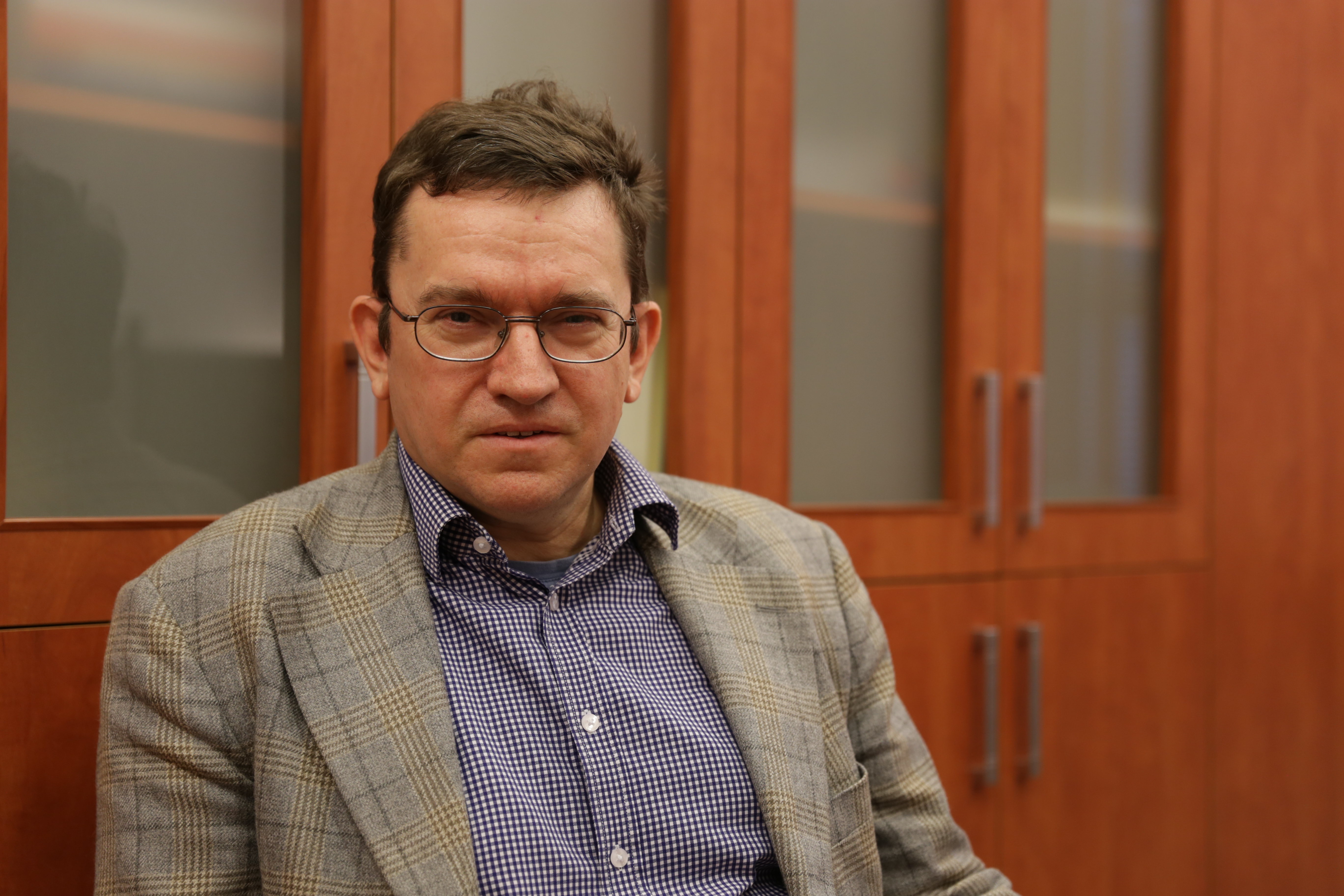
Prof. Wojciech Bożejko
Head of the Department of Control Systems
Wrocław University of Science and Technology, Poland
https://kam.pwr.edu.pl/en/prof-ph-d-d-sc-m-a-wojciech-bozejko/
Quantum Discrete Optimization
Abstract
I will present an overview of quantum discrete optimization, focusing on both its theoretical foundations and practical implementation on contemporary quantum hardware. It highlighting the potential to address combinatorial optimization problems that are computationally challenging for classical algorithms. Discrete optimization problems are formally defined and subsequently reformulated in a manner suitable for quantum processing, with particular emphasis on the Quadratic Unconstrained Binary Optimization (QUBO) framework.A significant part is devoted to the quantum annealing paradigm, as realized by D-Wave quantum computers, as well as quantum-gate based computers with Quantum Approximation Optimization Algorithm (QAOA). The structure of qubits, their physical implementation, and the connectivity of the D-Wave and IQM processors are discussed to illustrate the constraints and opportunities imposed by real quantum devices. Methods for embedding discrete optimization problems onto the quantum annealer are described, along with practical considerations such as problem scaling and noise.
Biodata
Wojciech Bożejko is a Professor at Wrocław University of Technology. He obtained M.Sc. in University of Wroclaw, Institute of Computer Science in 1999, Ph.D. in Wrocław University of Technology, Institute of Engineering Cybernetics in 2003, D.Sc. (habilitation) in Wrocław University of Technology, Faculty of Electronics, in 2011 and Full Professor title in 2020.From 2019 he is the Head of the Department of Control Systems and Mechatronics in Wrocław University of Science and Technology.
His research work is related, on the one hand, to the theoretical aspects of discrete optimization, especially in the aspect of quantum and multiprocessor computing, and, on the other hand, to their practical application in effective algorithms for solving real problems. He is an author of over 260 papers (over 1200 citations on Scopus, h-index: 18 published in peer-reviewed journals and conference proceedings from the field of quantum optimization, parallel processing, scheduling and logistics.
He has realized projects for the National Science Centre (NCN), the National Centre for Research and Development (NCBiR), and Toyota Motor Manufacturing Europe; he has served as an expert in project evaluations for the National Centre for Research and Development (NCBiR) and the Swiss National Science Foundation (SNF). He has supervised six doctoral dissertations (currently supervising two doctoral students). He is a member of the scientific societies: IEEE (senior member), IFAC, PTZP, WTN, and POLSPAR. He currently serves as the Chairman of the Scientific Discipline Council of Information and Communication Technology at the Wrocław University of Science and Technology. His Erdős number is 4. He is also a qualified musician, graduated (Master of Arts degree) in 1998 from the Academy of Music in Wroclaw in a specialization of piano.
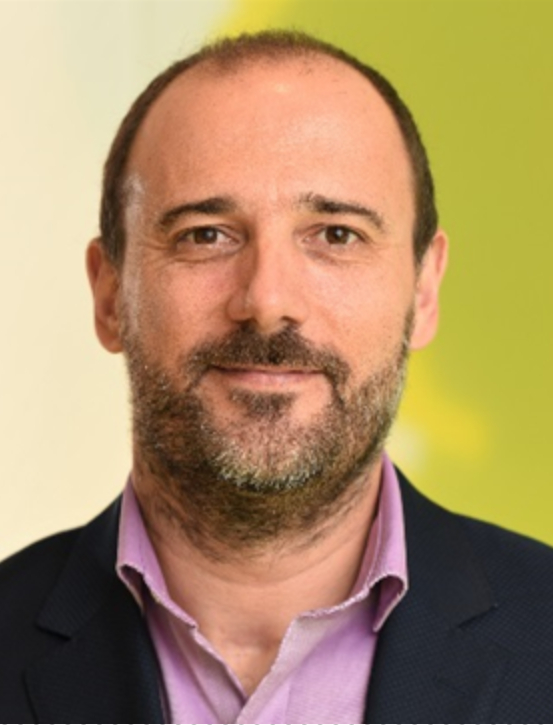
Prof. Vassilis Plagianakos
Department of Computer Science and Biomedical Informatics
University of Thessaly, Greece
https://www.plagianakos.gr/
From the Optimization of Nonlinear Multivariable Functions to the Training of Artificial Neural Networks and the Large Language Models
Abstract
A comprehensive journey is presented, tracing the evolution from fundamental Optimization principles to the training of modern Neural Networks and Large Language Models. Core mathematical ideas — such as gradients, derivatives, and loss minimization — are shown to underpin systems ranging from simple Perceptrons to trillion parameter transformers. Concepts like gradient descent, BackPropagation, and the challenges of high-dimensional loss landscapes are explained, followed by an exploration of how these foundations scale to massive LLMs, their architectures, and training demands. Despite the extraordinary scale and engineering sophistication of contemporary AI, the underlying principles remain consistent: Optimization of nonlinear multivariable functions drives learning across all advanced AI systems.
Biodata
Prof. Vassilis P. Plagianakos is with the Department of Computer Science and Biomedical Informatics at the University of Thessaly, Greece, where he currently serves as Dean of the School of Science. His research interests include Machine Learning and Data Science, Neural Networks, Big Data Mining, Bioinformatics, Clustering, Intelligent Decision Making, Evolutionary and Genetic Algorithms, Parallel and Distributed Computing, and real-world problem solving.
His past experience includes serving as President of the Hellenic National Organization for the Provision of Health Services (EOPYY) and President of the European Healthcare Fraud & Corruption Network (EHFCN); Chair of the Board of the Hellenic Artificial Intelligence Society; Founder of the Intelligent Systems Laboratory of the University of Thessaly; Head of the Department of Computer Science and Biomedical Informatics at the University of Thessaly; and Director of the postgraduate program in Informatics and Computational Biomedicine.