Title
AIoT Sensing for Smart Aging: Research Activities and Future Directions
Abstract
Worldwide, the population is aging due to increasing life expectancy and decreasing fertility. The significant growth in older population presents many challenges to health and aged care services. Over the past two decades, the Internet of Things (IoT) has gained significant momentum and is widely regarded as an important technology to change the world in the coming decades. Indeed, IoT will play a critical role to improve productivity, operational effectiveness, decision making, and to identify new business service models for social and economic opportunities. With the development of low-cost, unobtrusive IoT sensors, along with data analytics and artificial intelligence (AI) technologies, there is a significant opportunity to improve the well being and quality of life particularly of our older populations. In this talk, I will report some related research projects over the past decade conducted in my research group and also discuss several research directions.
Biodata
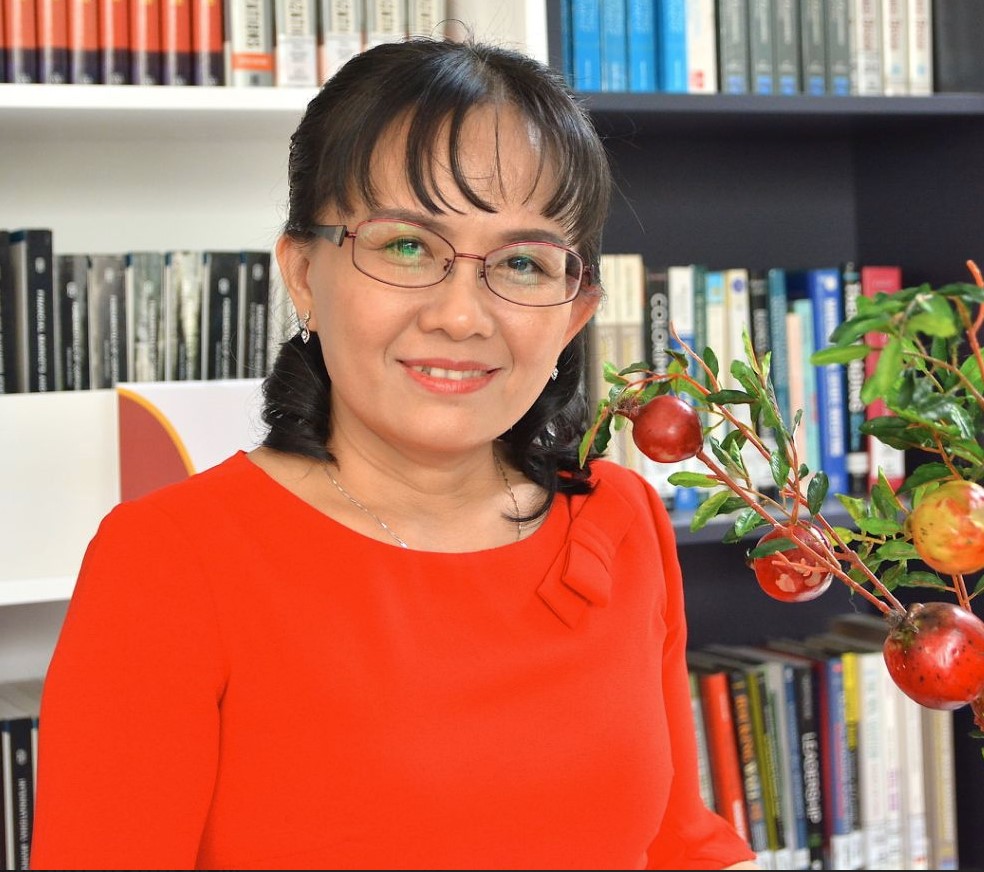
Michael Sheng is a Distinguished Professor and Head of School of Computing at Macquarie University, Sydney, Australia. Before moving to Macquarie University, he spent 10 years at School of Computer Science, the University of Adelaide. Michael Sheng’s research interests include the Internet of Things (IoT), service computing, big data analytics, machine learning, and Web technologies. He is ranked by Microsoft Academic as one of the Most Impactful Authors in Services Computing (Top 5 All Time) and by ScholarGPS as one of the Highly Ranked Scholars in Web Information System (Top 5 Lifetime). Michael Sheng is the recipient of many prestigious awards including AMiner Most Influential Scholar in IoT (2018), ARC (Australian Research Council) Future Fellowship (2014), Chris Wallace Award for Outstanding Research Contribution (2012), and Microsoft Research Fellowship (2003). He is the Vice Chair of the Executive Committee of the IEEE Technical Community on Services Computing (IEEE TCSVC) and a member of the ACS (Australian Computer Society) Technical Advisory Board on IoT.
Title
LLMs as research tools in SSH
keynote partially sponsored by
 Presentation
see the slides
Abstract
Presentation
see the slides
Abstract
LLMs — Large Language Models — have gained a lot of publicity in a variety of uses. They are known to be powerful tools in commercial applications, while their potential in research, especially in the Social Sciences and Humanities (SSH), is much less acknowledged. It is even less known that LLMs are not perfect, they exhibit different kinds of limitations and have not replaced all the Language Technology by default.
The starting point for the talk will be more than 10 years of experience of CLARIN-PL — a Language Technology research infrastructure, a part of European CLARIN ERIC — with a special focus on user needs, tasks, and requirements. A short overview of types of CLARIN-PL solutions, responding to those challenges, will be presented in a dynamic perspective of transition to an LLM-powered infrastructure. We will discuss an LLM as part of the solution, not a goal on its own. The development of NLP tools based on LLMs will be presented on the basis of several examples. In addition, the idea of an automatic research assistant, an LLM-powered, flexible language data research analysis process, will be introduced. It offers very interesting possibilities for adaptive exploration and classification. Moreover, we will take a brief look at different research applications of the RAG scheme and interesting perspectives on combining it with the research assistant scheme.
Research LLMs also bring into focus an important issue of levels of openness of LLMs, challenge of trustworthiness, and in-depth LLM evaluation, and contrast between closed commercial models vs. open models. Openness impacts the value of an LLM as a research tool. Yet another dimension is the perspective of computational and energy efficiency of solutions offered by a large-scale LT infrastructure like CLARIN-PL, used in millions of processing tasks per year. We need to look for scalable hybrid solutions that combine LLMs of different sizes with methods of lower computational demands. The talk will be concluded with a cautious look into further developments, especially into prospects of generative agents as research tools.
Biodata
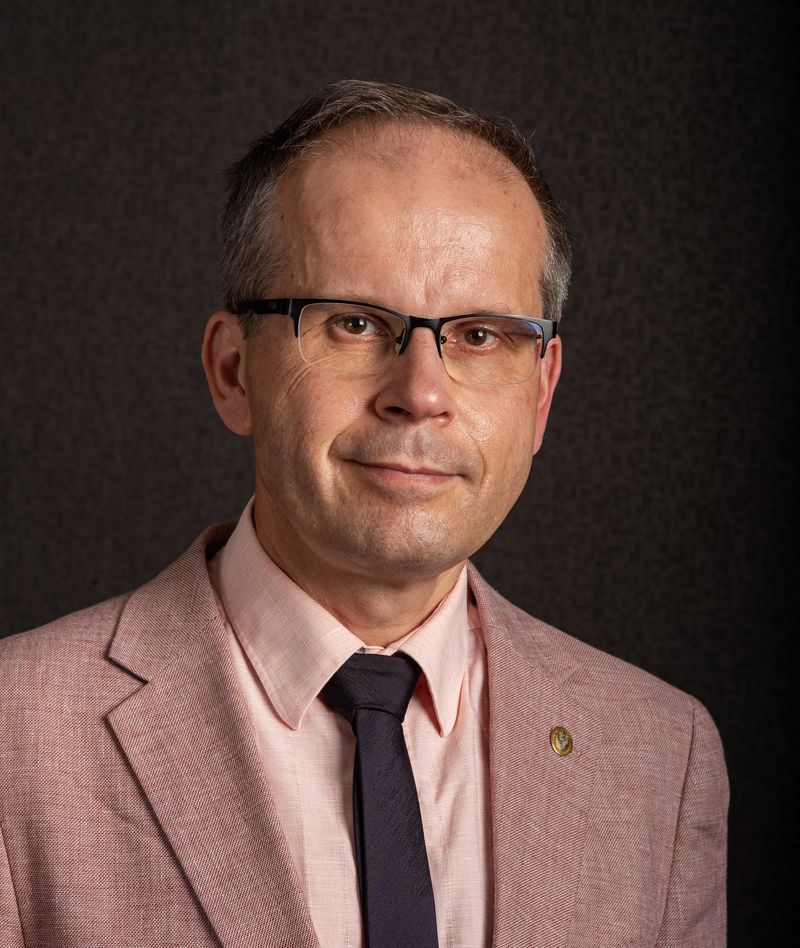
Maciej Piasecki, PhD, DSc, Associate Professor at
Artificial Intelligence Department, Wrocław University of Science and Technology, CLARIN-PL Coordinator, works in the fields of natural language processing, computational linguistics, lexicography, and digital humanities. He is one of the co-founders of
CLARIN-PL, the Polish part of the European language technology research infrastructure
CLARIN ERIC. From 2018 to 2022, he served two terms as chairman of the National Coordinators Forum of CLARIN ERIC. CLARIN-PL supports researchers with language resources, tools, and computational infrastructure, and also promotes open science in Poland from its very beginning. He has been also a coordinator of the
PLLuM project – Polish Large Language Model, aimed at developing a family of open LLMs for Polish and a virtual assistant for users of public institutions. PLLuM was built transparently in cooperation with many publishers, and on new sets of instructions focused on the Polish language.
Since 2005, Maciej Piasecki has been a leader of the
plWordNet project a large relational semantic dictionary of the Polish language also mapped onto Princeton WordNet for English. He is a member of the Global WordNet Association Board and the chair of the Computational and Corpus Linguistics Board at the Committee of Linguistics of the Polish Academy of Sciences (since 2024). He has coordinated and managed the work of many large research, R&D, and infrastructure projects, including
CLARIN-PL-Biz - one of the largest projects in the development of AI in Poland. He is a co-author of many open language resources and tools, especially for the Polish language, and numerous research publications.