Title
Driving Towards the Future: Hybrid Models for Human Behavior Prediction in Traffic
Abstract
The prediction of human road user behavior is a pivotal challenge in the deployment of autonomous vehicles. Traffic systems represent complex socio-technical multi-agent environments, shaped by physics, social norms, and human behavior. These systems are inherently open and continuously evolving. Effective behavior models and predictions for human-driven vehicles and pedestrians are essential not only as part of autonomous driving systems but also for simulation environments used in training, verification, and validation.
This keynote will begin by defining the problem space and the inherent challenges. It will provide an overview of recent advancements utilizing both data-driven methods, such as machine learning models leveraging neural networks, and model-based approaches, like interpretable game-theoretic frameworks. The discussion will highlight the integration of these two approaches to address the multifaceted challenges of predicting human road user behavior. Key topics will include foundational models, digital twins, and innovative strategies that combine data-driven and model-driven methodologies. In particular, the talk will explore the synergy between neural networks and symbolic reasoning, drawing on the Type I/Type II classification of human cognitive processes as an inspiration for hybrid modeling of human behavior.
Biodata
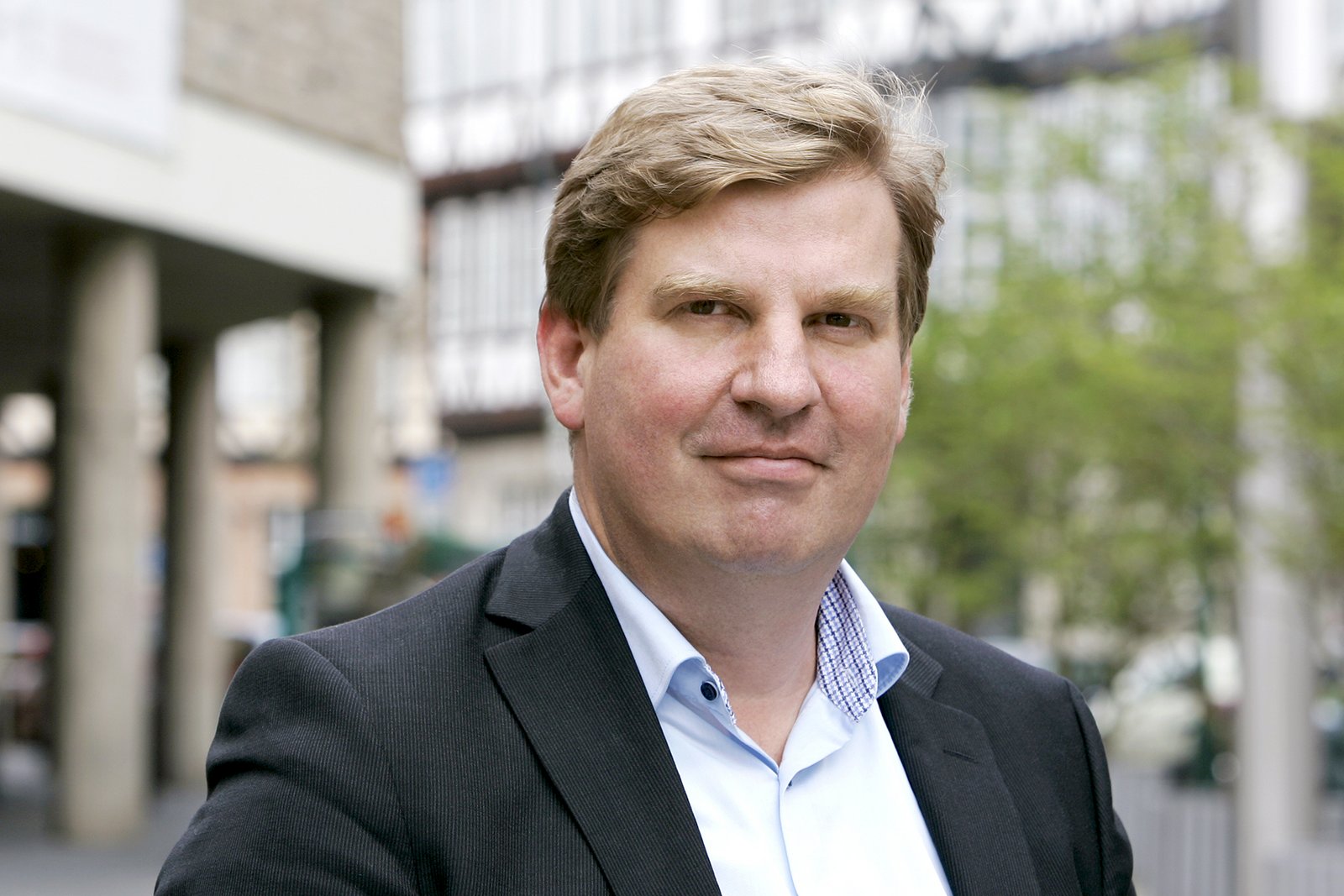
Krzysztof Czarnecki is a Professor of Electrical and Computer Engineering and a University Research Chair at the University of Waterloo, where he heads the Waterloo Intelligent Systems Engineering (WISE) Laboratory. He is a leading expert in the engineering of automated driving systems (ADS), with focus on assuring the safety of driving behavior and machine-learned functions. He co-lead the development of the first ADS tested on public roads in Canada in 2018. As a member of standardization committees, he has contributed to ISO 21448 (2nd edition), ISO 8800 (under development), and SAE J3164. Before coming to Waterloo, he was a researcher at DaimlerChrysler Research (1995-2002), Germany, focusing on improving software development practices and technologies in enterprise, automotive, and aerospace sectors. While at Waterloo, he held the NSERC/Bank of Nova Scotia Industrial Research Chair in Requirements Engineering of Service-oriented Software Systems (2008-2013). He received the Premier's Research Excellence Award in 2004 and the British Computing Society in Upper Canada Award for Outstanding Contributions to IT Industry in 2008. He has also received twelve Best Paper Awards, two ACM Distinguished Paper Awards, and five Most Influential Paper Awards.
Title
Towards Neuro-Symbolic AI with Knowledge Graphs and Generative AI
Abstract
In this talk, we discuss the topic of Neuro-Symbolic Artificial Intelligence (AI), focusing on the synergistic integration of Knowledge Graphs and Generative AI such as Large Language Models. Neuro-Symbolic AI represents an approach that combines the robust, interpretable reasoning capabilities of symbolic AI with the adaptive, data-driven strengths of neural networks. The talk will illuminate how this fusion offers a promising pathway towards more intelligent, explainable, and reliable AI systems. As a showcase of our approach towards neuro-symbolic AI we will demonstrate Corporate Memory, an enterprise ready Knowledge Graph and Neuro-Symbolic AI platform used by major Enterprises as well as the Open Research Knowledge Graph. The ORKG is representing research contributions in a structured and semantic way as a knowledge graph. The advantage is that information represented in a knowledge graph is readable by machines and humans. For creating the knowledge graph representation, we rely on a mixture of manual (crowd/expert sourcing) and (semi-)automated techniques leveraging Large Language Models. Only with such a combination of human and machine intelligence, we can achieve the required quality of the representation to allow for novel exploration and assistance services for enterprises and researchers. As a result, a scholarly knowledge graph such as the ORKG can be used to give a condensed overview on the state-of-the-art addressing a particular research quest, for example as a tabular comparison of contributions according to various characteristics of the approaches.
Biodata
Following stations at the universities of Dresden, Ekaterinburg, Leipzig, Pennsylvania, Bonn and the Fraunhofer Society, Prof. Auer was appointed Professor of Data Science and Digital Libraries at Leibniz Universität Hannover and Director of the TIB in 2017. Prof. Auer has made important contributions to semantic technologies, knowledge engineering and information systems. He is the author (resp. co-author) of over 200 peer-reviewed scientific publications. He has received several awards, including an ERC Consolidator Grant from the European Research Council, a SWSA ten-year award, the ESWC 7-year Best Paper Award, and the OpenCourseware Innovation Award. He has led several large collaborative research projects, such as the EU H2020 flagship project BigDataEurope. He is co-founder of high potential research and community projects such as the Wikipedia semantification project DBpedia, the Open Research Knowledge Graph ORKG.org and the innovative technology start-up eccenca.com. Prof. Auer was founding director of the Big Data Value Association, led the semantic data representation in the Industrial/International Data Space, is an expert for industry, European Commission, W3C, the German National Research Data Infrastructure (NFDI) and the European Open Science Cloud (EOSC).